
Posted by Eric Suarez on Jul 16th 2026
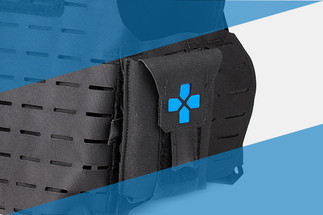
Best IFAK Pouch and Trauma Kit Guide
Medical gear is one of those things people usually think about after they realize they should have already had it.
A trauma kit is not a normal first aid kit. It is not there for paper cuts, blisters, or minor range-day problems. A real trauma kit is built for the kind of injuries where seconds matter, including severe bleeding, penetrating trauma, airway problems, and the first few minutes before higher-level care arrives.
That is why Blue Force Gear built the Trauma Kit NOW!® line.
The idea was never to make one pouch and pretend it worked for everyone. A patrol officer, prepared citizen, military end-user, range instructor, hunter, and tactical medic do not all carry the same equipment in the same place. Their trauma kit has to match their job, training, loadout, and how quickly they can get to it under stress.
The best trauma kit is not always the biggest one. It is the one you will actually carry, can actually reach, and know how to use.
Start Here: Do Not Pick the Pouch First
Before choosing an IFAK pouch or trauma kit, start with the problem you are trying to solve. A good trauma kit should answer a few practical questions.
What injuries are you preparing for?
A trauma kit should be built around serious injuries. Severe bleeding, chest trauma, airway issues, and hypothermia prevention are very different problems than small cuts or general first aid needs.
If the kit is meant for trauma, the contents should support trauma care. If it is meant for general first aid, that is a different kit.
Where will the kit be carried?
A kit on a duty belt is different from one on a battle belt. A kit mounted to a plate carrier is different from one carried in a vehicle, range bag, pack, or chest rig. The pouch has to fit the location. If it is too large, blocked by other gear, or mounted where no one can reach it, the contents may not matter when the kit is needed.
Who is going to use it?
A trained medic, patrol officer, military end-user, range instructor, hunter, and prepared citizen may all need different contents. The kit should match the user’s training level, equipment, policy requirements, and realistic use case.
There is no single best trauma kit for everyone. The right kit is the one that fits the mission, stays accessible, and carries supplies the user actually knows how to use.
What Is an IFAK?
IFAK stands for Individual First Aid Kit.
In military, law enforcement, and emergency preparedness use, an IFAK usually refers to a compact trauma-focused kit designed to treat serious injuries at the point of injury. A standard first aid kit is usually built for minor injuries. An IFAK is built for a bad day.
That distinction matters.
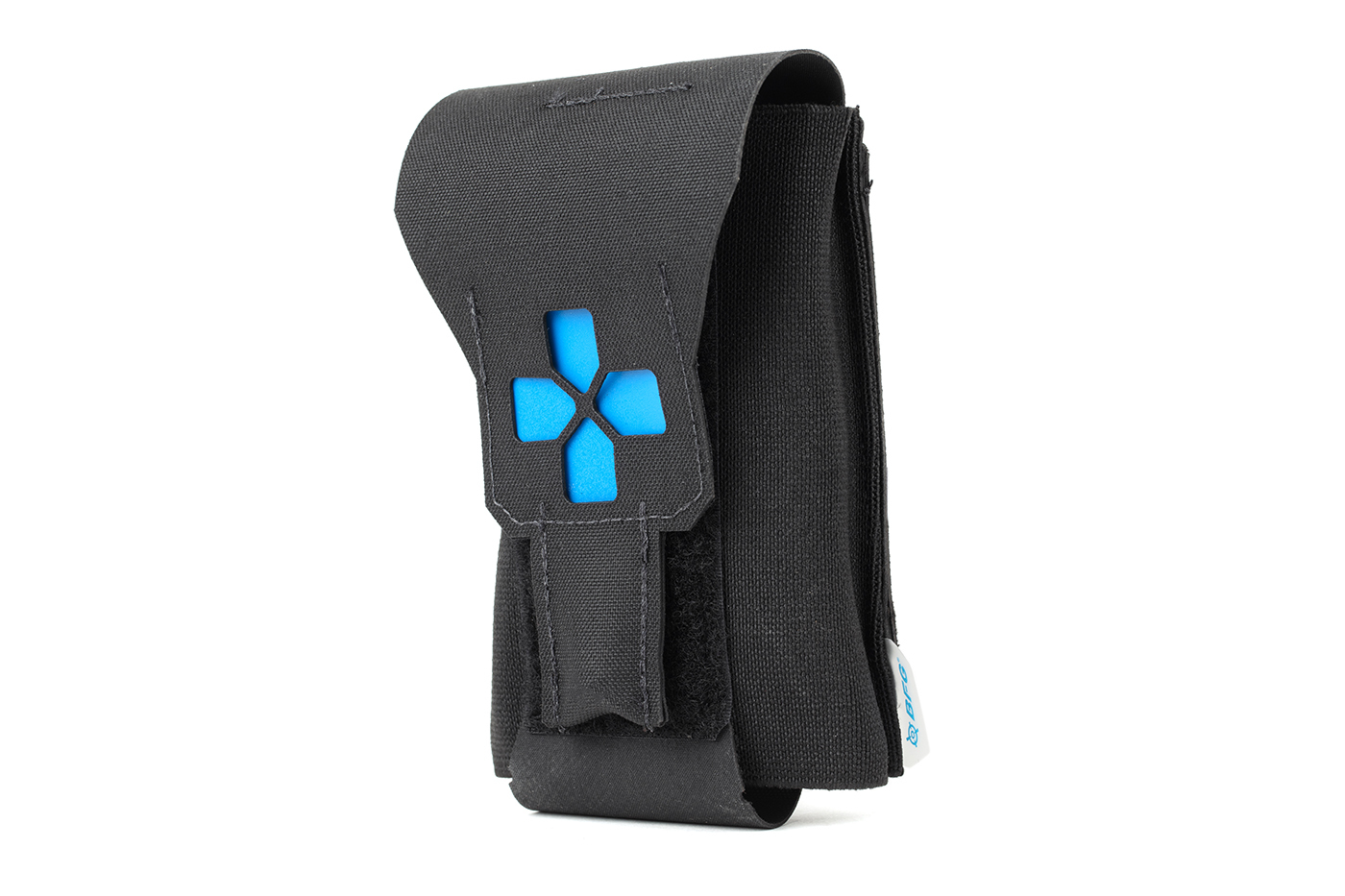
A pouch full of medical supplies does not make someone prepared by itself. If you carry a trauma kit, get training. Open the kit. Know what is inside. Practice deploying it from the location where you actually carry it.
Gear does not replace skill.
Trauma Kit vs. First Aid Kit
A first aid kit usually handles minor injuries: bandages, antiseptic wipes, small cuts, scrapes, blisters, and general comfort items.
A trauma kit has a different job.
A trauma kit is built around serious injuries where immediate action may be required before professional medical care arrives. Depending on the kit and fill level, that may include hemostatic gauze, compression dressings, chest seals, gloves, hypothermia protection, airway components, and other trauma-focused supplies.
That does not mean every person needs the largest kit or the most advanced medical loadout. It means the kit should match the user’s training, mission, and environment.
If you do not know how to use a component, get trained before you carry it as part of your plan.
Why Carry a Trauma Kit?
Because emergencies do not wait until you are ready.
You may carry a firearm. You may not. You may be a police officer, soldier, firefighter, range instructor, hunter, responsible civilian, or someone who understands that trauma can happen anywhere.
The common thread is simple. If someone is bleeding badly, you do not want your medical gear buried in a backpack, locked in a truck, or trapped under other equipment. A trauma kit should be easy to find, easy to reach, secure enough to stay where you put it, fast to deploy, and organized enough that the contents can be identified quickly.
That is the problem the Trauma Kit NOW! line was designed to solve.
Why Blue Force Gear Trauma Kits Are Different
The Trauma Kit NOW! series was built around access. A lot of medical pouches can hold supplies. That is only part of the problem. The real issue is getting to those supplies quickly when your hands are cold, wet, gloved, injured, or shaking. Blue Force Gear designed the Trauma Kit NOW! line around real access, not just storage.
Fast Deployment
Every Trauma Kit NOW! pouch is built for quick access. The removable insert or shingle keeps medical contents organized and allows the user to deploy the kit without fighting unnecessary closures. When the kit is needed, it needs to come out cleanly and quickly. That is the point.
BLIP® Pull Tab
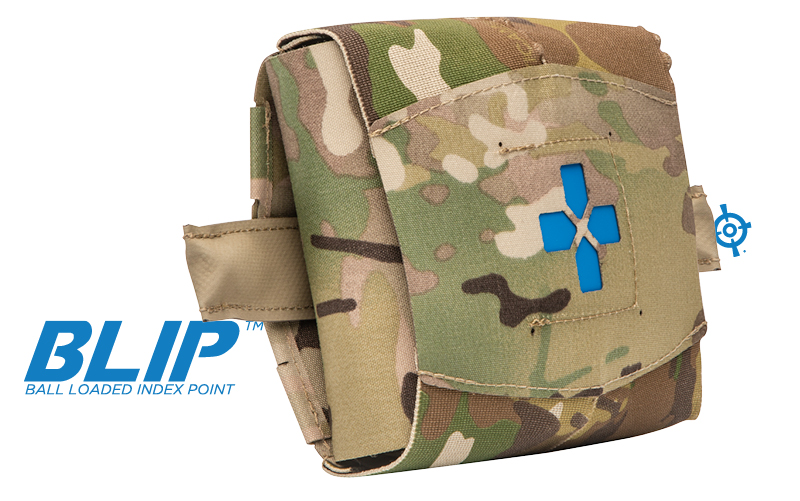
Every Trauma Kit NOW! pouch uses BFG’s BLIP® pull tab, short for Ball Loaded Index Point.
The idea came from a real problem. When your hands are cold, wet, numb, or gloved, grabbing a flat piece of webbing can be harder than it looks. The BLIP places a small ball between layers of material so your fingers can positively identify and pull the tab by feel.
That matters when fine motor skills start to go away.
Duty-Grade Materials
BFG trauma kits are built with high-performance materials such as ULTRAcomp®, Ten-Speed® military-grade elastic, CORDURA®, and bonded nylon thread depending on the model.
A medical pouch is not the place for bargain-bin construction. If the pouch rips, binds, dumps contents, or fails when it is finally needed, it has created another problem.
Multiple Sizes for Different Users
BFG offers the Trauma Kit NOW! family in multiple sizes and configurations, from compact everyday carry options to larger MOLLE-mounted kits. The line can be purchased empty or with different medical fill levels depending on the model.
That gives users the ability to choose the pouch first, then match the contents to their training, mission, and carry location.
Quick Answer: Which BFG Trauma Kit Should I Choose?
| If You Need | Start with this kit | Why |
|---|---|---|
| The smallest possible trauma kit | Micro Trauma Kit NOW! NANO | Best for compact carry and essential bleeding-control supplies. |
| Compact duty belt or MOLLE carry | Micro Trauma Kit NOW! NANO ES | A strong option for users who need compact carry with belt or MOLLE mounting flexibility. |
| Everyday carry, range belt, or compact IFAK | Micro Trauma Kit NOW! | A strong all-around compact trauma pouch for users who want real capability without a large pouch. |
| More capacity without moving to a larger vertical pouch | Micro Trauma Kit NOW! PLUS | Better for users carrying larger components such as full-size chest seals or larger pressure dressings. |
| Full-size capability in a smaller MOLLE footprint | Micro Trauma Kit NOW! SMALL | A practical option for users who need more capability in a controlled MOLLE footprint. |
| Larger military or professional medical loadout | Micro Trauma Kit NOW! MEDIUM | Best for users who need more room, flexibility, and a larger medical loadout. |
| Unit, agency, or expanded medical requirements | Micro Trauma Kit NOW! LARGE | Special-order option for larger medical requirements. |
A Trauma Kit Is a System, Not Just a Pouch
A pouch by itself does not make someone prepared. A real trauma setup includes the pouch, the medical contents, the tourniquet, and the training.
The Pouch
The pouch keeps medical components organized, protected, and mounted where they can be reached. This is where the Trauma Kit NOW! line matters. The pouch should stay secure during movement but still deploy quickly when hands are wet, cold, gloved, or shaking.
The Medical Contents
The contents should match your training and environment. At a minimum, most serious trauma kits are built around bleeding control. More advanced kits may include chest seals, airway components, hypothermia prevention, and other mission-specific supplies.
The Tourniquet
A tourniquet should usually be staged separately or externally where it can be reached immediately. It should not be buried inside the kit. If someone is dealing with life-threatening extremity bleeding, they should not have to open a pouch and search for the one item they likely need first.
The Training
This is the part people skip.
A trauma kit is only useful if the person carrying it knows what is inside and how to use it. If you carry a kit, take training. If your team carries kits, make sure everyone knows where they are staged and how they deploy.
What Should Be in an IFAK?
There is no universal IFAK loadout that works for every person. The right contents depend on training, policy, environment, and risk.
Most trauma-focused kits are built around the same priorities: control major bleeding, support breathing, prevent the casualty from getting worse, and keep supplies organized enough to use under stress.
Common IFAK components may include:
- Tourniquet, staged separately or externally
- Hemostatic gauze
- Pressure dressing or compression dressing
- Chest seals
- Nitrile gloves
- Trauma shears
- Flat-fold tape
- Hypothermia blanket
- Marker
- Airway components when appropriate and when the user is trained
Do not carry advanced medical components just because they look professional. Carry what fits your training, policy, and realistic use case. The goal is not to stuff the pouch until it is full. The goal is to carry the right items, stage them correctly, and get to them quickly.
Where Should You Carry an IFAK or Trauma Kit?
Medical gear should not be mounted wherever there happens to be leftover space.
Placement matters.
A trauma kit should be easy to reach, easy for others to identify, and positioned where it does not interfere with the rest of the loadout. A pouch mounted too far back on a belt, buried under a pack, or blocked by other equipment may look fine until someone actually needs it.
Check your setup with a few simple questions:
- Can you reach the kit with either hand?
- Can another person find it on you if you are the casualty?
- Can you access it while seated in a vehicle?
- Does it interfere with your holster, magazines, radio, or other mission-essential gear?
- Can it be opened without dumping contents everywhere?
- Is your tourniquet separate and immediately accessible?
Smaller options such as the NANO, NANO ES, and Micro Trauma Kit NOW! make sense for compact carry. The Trauma Kit NOW! SMALL and MEDIUM make more sense for users who need larger medical loadouts on MOLLE platforms.
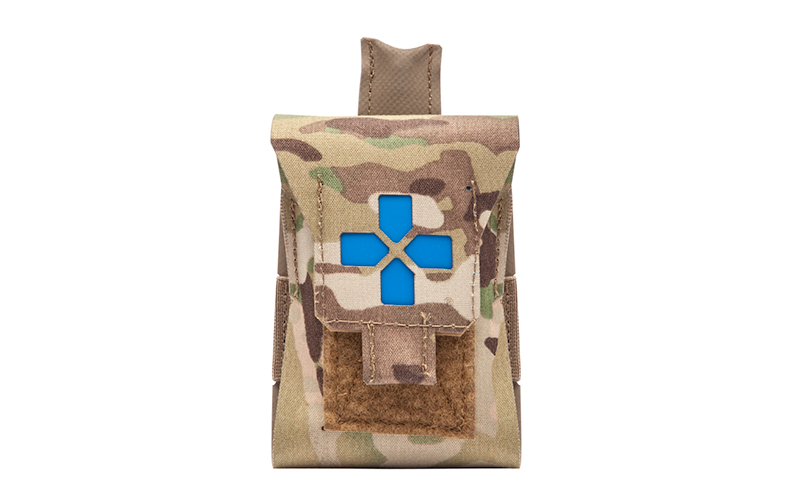
Micro Trauma Kit NOW! NANO
The Micro Trauma Kit NOW! NANO is the smallest option in the Trauma Kit NOW! family. This is the choice for users who want the smallest possible trauma kit footprint and are primarily focused on immediate bleeding control. It is not a full-size medical pouch, and it is not trying to be. It is for the user who wants something compact enough to actually carry every day.
Best use cases include everyday carry, pocket carry, range bags, vehicle consoles, minimalist belt setups, and backup medical kits. The NANO should be carried with a separate tourniquet if your goal is serious bleeding control.
Micro Trauma Kit NOW! NANO ES
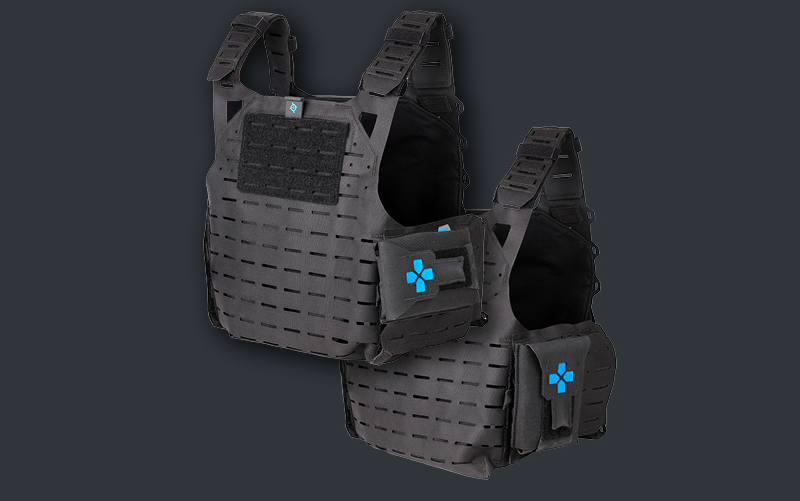
The Micro Trauma Kit NOW! NANO ES gives users a compact trauma kit with more capability than the original NANO. That makes it a strong fit for law enforcement, duty belts, low-profile professional use, and users who need a compact kit that can still carry serious medical components.
This is one of the most important products for BFG to own in search because it answers a real market need: compact, professional-grade trauma carry that does not feel like a bulky afterthought.
Micro Trauma Kit NOW!
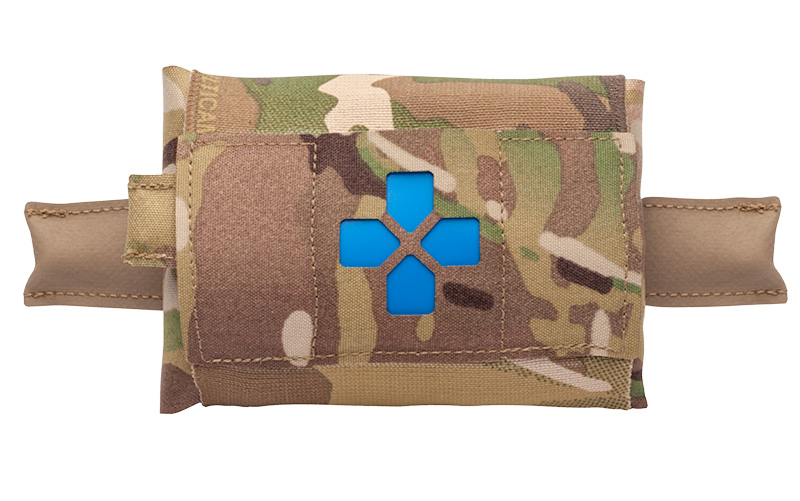
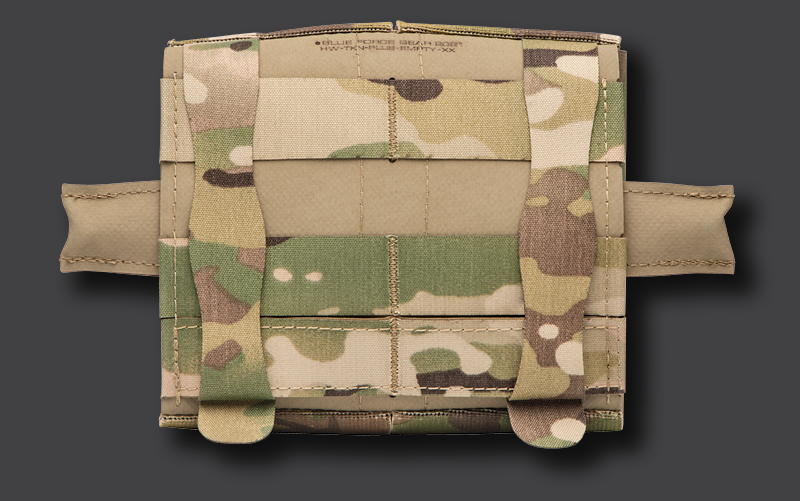
The Micro Trauma Kit NOW! is one of the best-known BFG medical products for a reason. It was designed as an everyday carry trauma kit for law enforcement professionals, prepared citizens, hunters, range users, and anyone who wants a compact IFAK pouch that can live on a belt or MOLLE platform.
The design uses an outer pouch and removable insert so the medical supplies stay organized and visible when deployed. The kit can be accessed from either side by pulling the BLIP pull tabs.
This is the kit for the user who wants real trauma capability without carrying a large pouch. Best use cases include range belts, duty belts, everyday preparedness, prepared citizen carry, hunting kits, and compact MOLLE setups.
Micro Trauma Kit NOW! PLUS
The Micro Trauma Kit NOW! PLUS is for users who like the Micro footprint but need more room. It is larger than the standard Micro Trauma Kit NOW! and built to carry larger medical components, including items such as a 6-inch pressure dressing and full-size chest seals depending on configuration.
This is where many serious users land when they realize the smallest kit may not hold everything they want, but they still do not want a larger vertical pouch. Best use cases include battle belts, professional users, tactical teams, range instructors, users carrying larger medical components, and MOLLE setups where horizontal mounting makes sense. The PLUS is the bridge between compact carry and expanded capability.
Trauma Kit NOW! SMALL
The Trauma Kit NOW! SMALL is built for users who need full-size trauma capability in a smaller vertical MOLLE pouch. It uses a removable shingle that can be pulled from the pouch using the BLIP-equipped handle, while the outer pouch stays mounted to the platform.
This is the right answer when the user wants more medical capability but still needs to keep the footprint controlled. Best use cases include duty rigs, battle belts, plate carriers, MOLLE-compatible gear, military use, law enforcement use, and prepared professional use.
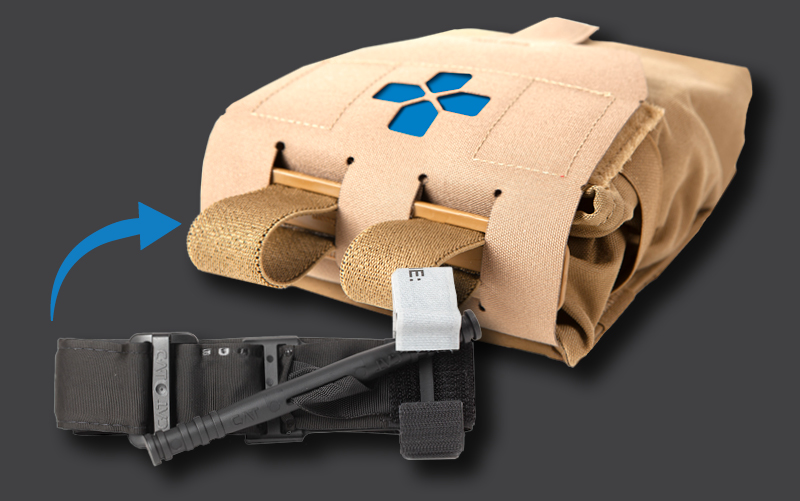
Trauma Kit NOW! MEDIUM
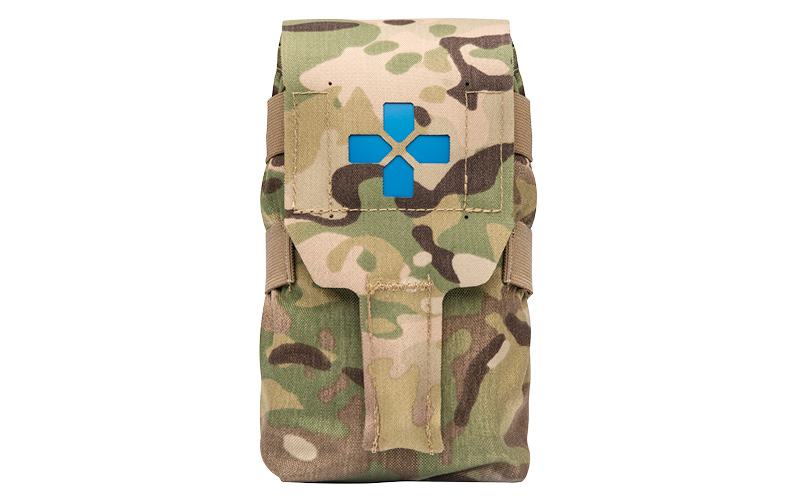
The Trauma Kit NOW! MEDIUM is the original larger-format BFG trauma kit. This is the kit for users who need room, flexibility, and a larger medical loadout without turning the pouch into a loose dump bag.
Best use cases include military users, team medical loadouts, plate carriers, larger MOLLE platforms, vehicle or mounted kits, and users building around full-size IFAK contents. The MEDIUM gives users more flexibility with contents and layout. It is less about being minimal and more about carrying the medical gear the job requires.
Empty, Essentials, PRO, or Advanced: Which Fill Level Should You Choose?
BFG trauma kits can be purchased empty or with different medical supply levels depending on the model.
Empty Pouch
Choose an empty pouch if your unit, agency, medical director, or personal training standard already dictates exactly what you carry. This is also the best choice for users who already have trusted medical components and only need a better pouch.
Essentials
Essentials is the entry point for users who want core trauma supplies in a ready-to-load BFG pouch. This is a practical starting point for people building a first serious trauma kit.
PRO
PRO is for users who want a more capable kit with upgraded components compared to the basic fill. This makes sense for law enforcement, trained civilians, range staff, and users who are building around more than basic bleeding control.
Advanced
Advanced is for trained users who understand the contents and have the skill, authority, and context to use them appropriately. Do not buy advanced medical components just because they look serious. Buy what you are trained to use.
Why Tourniquets Should Usually Be Carried Separately
A tourniquet is an immediate-access item.
It should not be buried inside your trauma kit where you have to open a pouch, remove an insert, and dig for it while someone is bleeding badly. A tourniquet should be staged where it can be reached quickly with either hand when possible. For many users, that means front of body, near the centerline, on a belt, plate carrier, or dedicated tourniquet holder.
BFG offers dedicated tourniquet carry options for that reason. The trauma kit carries the broader medical loadout. The tourniquet needs to be immediately available. That is not a marketing detail. That is a use detail.
Common IFAK and Trauma Kit Mistakes
Buying the Biggest Kit First
More gear is not always better. A kit that is too large may get left behind, mounted in a bad location, or overloaded with supplies the user does not know how to use.
Hiding the Tourniquet Inside the Kit
A tourniquet is usually the first item needed for severe extremity bleeding. It should be staged where it can be reached immediately.
Mounting the Kit Where No One Can Reach It
A trauma kit mounted behind the body, under a pack, or blocked by other equipment may not be useful when things go bad.
Carrying Medical Gear Without Training
Owning medical supplies is not the same thing as being prepared. Take training, practice deploying the pouch, and know what every item is for.
Treating a Trauma Kit Like a General First Aid Kit
A trauma kit is not primarily for headaches, small cuts, or comfort items. It is built around life-threatening injuries where seconds matter.
Frequently Asked Questions
What does IFAK stand for?
IFAK stands for Individual First Aid Kit. It usually refers to a compact trauma-focused kit designed to treat serious injuries at the point of injury before higher-level medical care is available.
Is an IFAK the same as a first aid kit?
No. A first aid kit usually focuses on minor injuries like cuts, scrapes, blisters, and basic comfort items. An IFAK is built around trauma care and life-threatening injuries such as severe bleeding or penetrating trauma.
What is the best IFAK pouch?
The best IFAK pouch is the one that matches your training, mission, carry method, and medical loadout. For compact carry, the Micro Trauma Kit NOW! or NANO series may be the best fit. For larger loadouts, the Trauma Kit NOW! SMALL or MEDIUM may make more sense.
Should a tourniquet go inside my trauma kit?
Usually, no. A tourniquet should be carried where it can be reached immediately. It should not be buried inside the kit. Many users stage a tourniquet separately on the belt, plate carrier, or near the centerline of the body.
What is the best trauma kit for a battle belt?
For most battle belt setups, the Micro Trauma Kit NOW!, Micro Trauma Kit NOW! PLUS, or Trauma Kit NOW! SMALL are the strongest options. The right choice depends on how much medical gear you need to carry and how much belt space you have.
What is the best trauma kit for law enforcement?
Law enforcement users should choose based on duty requirements, department policy, and available space. The NANO ES, Micro Trauma Kit NOW!, and Trauma Kit NOW! SMALL are all strong options depending on the officer’s role and loadout.
What is the smallest BFG trauma kit?
The Micro Trauma Kit NOW! NANO is the smallest Trauma Kit NOW! option. It is designed for compact carry and essential bleeding-control supplies.
Can BFG trauma kits be mounted to MOLLE?
Yes. Several Trauma Kit NOW! models are designed for MOLLE-compatible platforms, and some models offer belt or MOLLE mounting options depending on configuration.
Are BFG trauma kits made in the USA?
Yes. BFG trauma kits are made in the USA.
Should I buy an empty trauma kit or a filled kit?
Buy an empty pouch if you already know exactly what components you need or have an agency or unit standard. Buy a filled kit if you want a ready-to-load option with supplies matched to the pouch. Choose Essentials, PRO, or Advanced based on your training and intended use.
Choose the Trauma Kit You Will Actually Carry
The best trauma kit is not the one with the longest list of contents. It is the one that fits your role, mounts where you need it, carries the supplies you are trained to use, and can be opened quickly when the situation is already going sideways.
If you need a compact EDC trauma kit, start with the NANO or Micro Trauma Kit NOW!. If you need more capability on a belt or MOLLE platform, look at the PLUS, SMALL, or MEDIUM. If you are outfitting a team, department, or unit, choose the pouch and fill level around the mission instead of forcing everyone into the same setup.
Carry the kit. Stage the tourniquet. Get trained.
When seconds matter, the gear has to be where you need it.
Not in the truck.
Not buried in a pack.
Not trapped behind three other pouches.
Now.
That is why it is called Trauma Kit NOW!.
