
Oct 6th 2026
Chem Lights for Law Enforcement
Patrol runs on communication. Most of that communication moves across a radio or through spoken directions, but both methods fail in predictable places.
A caller cannot explain which of four rural driveways leads to the house. An officer inside a structure cannot safely provide a running account of every room searched. EMS arrives at the patrol vehicles but still cannot see the patient two hundred feet behind the property near a tree line.
These are not unusual edge cases. They are ordinary patrol problems made worse by darkness, distance, terrain, heavy radio traffic, and limited staffing.
A chem light gives officers another way to communicate.
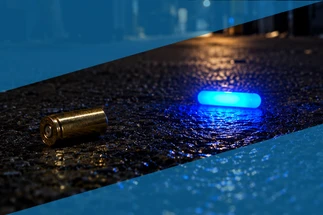
Also referred to as chemlights, chemical light sticks, chemsticks, or marking lights, these tools require no batteries, charging equipment, electronic signal, software, or maintenance. Once activated and placed under an established agency standard, a chem light creates an immediate visual reference that responding officers, supervisors, fire personnel, and EMS can understand.
For law enforcement, that turns a simple marking light into a practical tool for directing responders, identifying locations, recording search progress, and reducing unnecessary radio traffic.
Why Law Enforcement Needs a Patrol Marking System
A flashlight helps an officer see. A marking light helps other people understand what the officer has found, where the officer has moved, or where responding personnel need to go.
That distinction matters.
During a complicated response, every arriving unit begins with an incomplete picture. Officers use the radio to build that picture, but verbal descriptions can become long, imprecise, or outdated as an incident develops. Visual marks remain where they are placed and continue communicating after the officer moves on.
Patrol marking can support several common needs:
- Directing responding units to the correct entrance
- Identifying a patient or casualty location
- Showing that officers have entered a building
- Recording which rooms or areas have been searched
- Separating searched terrain from unchecked terrain
- Marking routes, boundaries, or key locations
- Supporting low-light training and range operations
The purpose is not to replace the radio, flashlight, mapping system, or agency tactics. It is to provide a simple layer of nonverbal communication where those tools leave a gap.
Establish the Standard Before Issuing the Equipment
A collection of colored lights is not a marking system.
The system only works when officers understand what each color means, where a light should be placed, and what action the mark represents. Without an established standard, one officer’s mark can mean something entirely different to the next officer entering the scene.
For general patrol use, John “Chappy” Chapman recommends starting with two colors.
Green for Law-Enforcement Functions
Green can identify an officer’s route, an entrance used by law enforcement, a searched area, or another police function established by the agency.
Red for Medical Functions
Red can mark a patient, casualty location, EMS entrance, or medical route.
Two colors are easier to teach, remember, stock, and reinforce than a larger color vocabulary. Chappy recommends starting with an approximate mix of 80 percent green and 20 percent red because most patrol marking needs involve law-enforcement functions.
That recommendation is a starting point, not a universal standard. Each agency should establish and approve its own marking procedures based on local policy, training, environment, and operational needs.
Marking Rural Driveways and Call Locations
Rural addresses often identify the road but not the actual location of the call.
A residence may sit hundreds of yards away from the pavement. Tree cover can hide the building. Several driveways may appear nearly identical at night. Responding units pass the correct entrance, turn around, and ask for additional directions while the first officer tries to describe terrain that is difficult to see.
A green chem light placed at the correct driveway creates a clear reference:
Turn in at the green light.
For a medical response, a red chem light can direct EMS to the appropriate entrance.
The same concept applies beyond rural homes. Officers can use a standardized mark to identify the correct access point at apartment complexes, schools, churches, industrial properties, outdoor events, farms, warehouses, campuses, and other large sites with multiple entrances.
Guiding EMS to the Patient
EMS personnel often move toward the most obvious landmark, which is usually the patrol vehicle. The patient may not be there.
The patient could be behind the house, inside a barn, near a wood line, down an embankment, or in an area the ambulance cannot directly reach. Verbal instructions may work, but they require responders to interpret directions while moving through an unfamiliar property in darkness.
A red chem light placed at the patient’s location gives EMS a visible destination.
Chappy describes a nighttime call on a large property where the ambulance stopped at his vehicle even though the patient was located near the woods. He activated a red chem light and threw it toward the medics to show them where to move.
The solution was simple, but simplicity is the point. On a medical call, a clear visual reference can reduce the time spent searching for the patient.
Marking Officer Movement During Active-Threat Response
During an active-threat response, arriving officers must quickly understand where other law-enforcement personnel have already moved.
An officer entering a building can place green chem lights along the route as visible indicators that a friendly officer has moved through that area. Follow-on personnel receive useful context before direct communication is possible.
The marks can also help distinguish areas that have already received attention from those that remain unchecked.
Chem lights do not replace positive identification, radio communication, established tactics, or agency training. They provide an additional visual reference within an environment where conditions and personnel locations can change quickly.
Creating a Visible Building-Search Marking System
Chem lights can give officers and supervisors a simple way to track search progress throughout a structure.
An agency could establish a placement standard such as:
- A green chem light in the doorway indicates that the room has received an initial search.
- Moving the light to the center of the room indicates that a more detailed secondary search has been completed.
The exact meaning and placement should be defined through agency policy and training. The important point is consistency. Every officer entering the structure must understand what the mark represents.
A visible marking system can reduce duplicated work and give supervisors a clearer picture of search progress. Instead of relying only on memory or fragmented radio traffic, personnel can see which spaces have been addressed and which require further attention.
Supporting Missing-Person and Suspect Searches
Large-area searches become more difficult to coordinate as they expand and additional officers arrive.
Personnel searching for a suspect, missing child, or vulnerable adult can unintentionally cover the same terrain while other areas remain unchecked. Verbal descriptions of fields, tree lines, trails, and property boundaries are rarely precise enough to provide a complete operational picture.
Green chem lights can identify ground that has already been covered and direct incoming personnel toward areas that still require attention.
The farther a search expands, the more valuable that visible record becomes. It gives supervisors a practical way to track progress while reducing unnecessary duplication and radio traffic.
The Real Problem Is Carrying the Lights
Chem lights already work. The challenge is getting officers to carry enough of them consistently without creating another equipment problem.
Loose, full-size chem lights take up space. They can become crushed, lost, or damaged when carried without protection. When stored in a patrol bag or left in the vehicle, they may not be available when an officer needs them.
The Blue Force Gear MARCO® family of marking light dispensers addresses that carry problem.
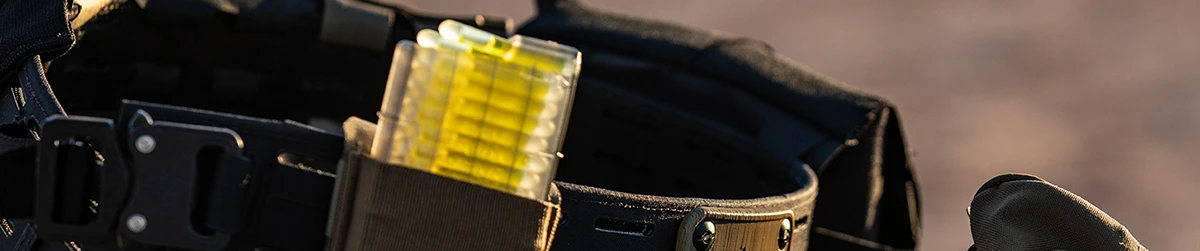
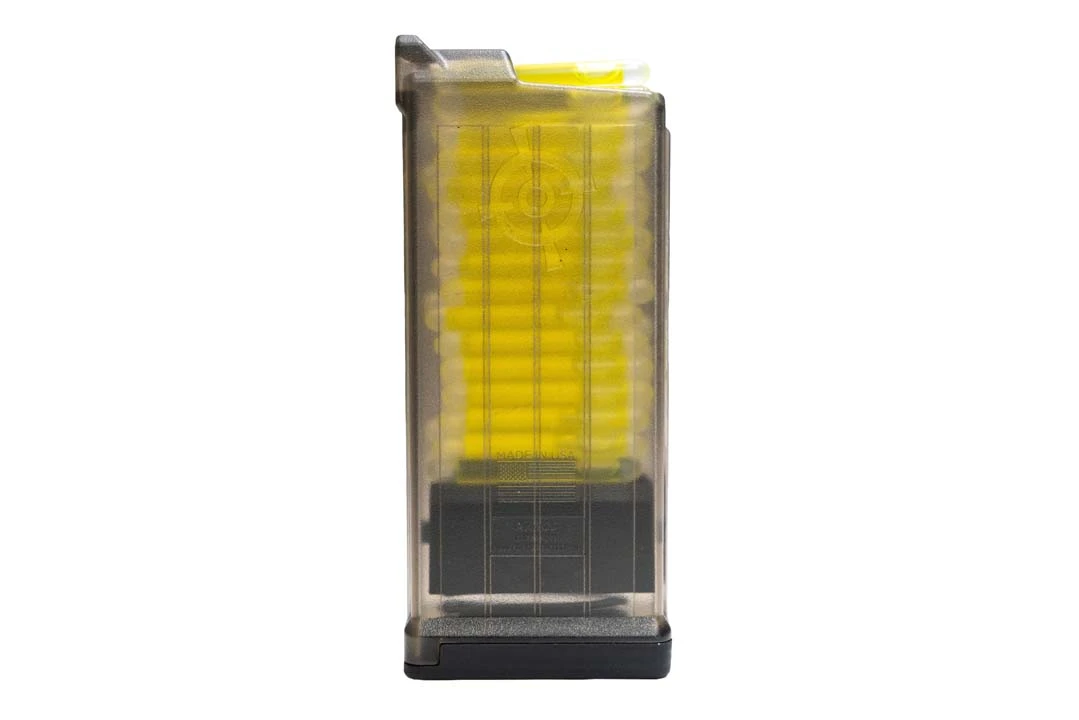
Both MARCO 1.5 and MARCO HR carry thirty compact two-inch marking lights in a magazine-style format. Instead of relying on taped bundles or loose full-size sticks, officers can keep an organized marking capability available on their equipment.
The compact format matters because a marking standard only works when officers consistently carry the tools required to use it.
Choosing Between MARCO 1.5 and MARCO HR
Blue Force Gear offers two MARCO marking systems for different deployment requirements: MARCO 1.5 and MARCO HR.
Both systems solve the same basic problem. They provide a compact, organized way to carry thirty individual two-inch marking lights without relying on loose chem lights or improvised bundles.
The primary difference is how the marking lights are deployed and activated.
MARCO® 1.5
MARCO 1.5 uses a deliberate three-step process. The user pushes an individual marking light forward, lifts it to activate the light, and pulls it from the dispenser for placement.
This controlled deployment makes MARCO 1.5 a practical option for:
- General patrol marking
- Rural call-location marking
- EMS and casualty-location marking
- Missing-person and area searches
- Building-search training
- Low-light range operations
- Firing-line and target identification
- Agencies equipping a larger number of officers
MARCO 1.5 offers agencies a lower-priced entry point into the MARCO system while maintaining the compact thirty-light capacity and organized magazine-style format.
MARCO® HR
MARCO HR is designed for faster deployment in higher-tempo environments.
Its palm-actuated mechanical design activates and dispenses each marking light in one fluid motion. The user does not have to complete the separate push, lift, and pull sequence required by MARCO 1.5.
That reduced handling makes MARCO HR better suited for:

- Higher-tempo tactical operations
- Dynamic room marking
- Active-threat response
- Hostage-rescue applications
- Rapid low-light marking
- Situations where the user cannot afford to look down
- Teams that prioritize deployment speed and reduced movement
MARCO HR carries the same number of two-inch marking lights but sits at a higher price point because of its integrated activation and deployment mechanism.
Which MARCO Is Right for an Agency?
The right system depends on the application.
MARCO 1.5 may be the better fit for general patrol marking, training, search operations, rural response, and departments looking to equip more officers at a lower price point.
MARCO HR may be the better fit for tactical teams, active-threat response, dynamic clearing, and situations where faster activation and reduced handling are the primary requirements.
Both systems give officers a compact and organized supply of individual marking lights. The decision comes down to operational requirements, deployment-speed needs, expected users, and budget.
MARCO Beyond the Training Range
The MARCO family is commonly associated with low-light training, where marking lights can identify firing lines, lane boundaries, targets, and other range references.
Those same characteristics make MARCO practical for patrol:
- Compact two-inch marking lights
- Thirty-light capacity
- Organized and protected carriage
- Multiple color options
- No batteries or electronic maintenance
- Options for different deployment speeds
- Integration with existing duty equipment
This is not equipment created for a theoretical patrol problem. It is an established marking system being applied to broader law-enforcement communication needs.
The hardware provides the capability. The agency standard gives the marks meaning.
MARCO vs. Loose Full-Size Chem Lights
Traditional full-size chem lights remain useful, but carrying several presents practical challenges for patrol officers.
Loose chem lights require more storage space, can become disorganized or damaged, and are often separated from the officer’s working equipment. That can result in the lights remaining in the vehicle when they are needed elsewhere.
MARCO keeps thirty compact marking lights organized within a magazine-style dispenser. Officers can integrate the system into their approved equipment configuration rather than storing a loose collection of full-size sticks in a pocket or bag.
The advantage is not simply a smaller chem light. It is a repeatable carriage and deployment system that makes it practical for officers to keep multiple individual markers available.
Establishing an Agency Chem-Light Standard
Equipment alone will not create a reliable marking system.
Before deployment, an agency should define:
- Which colors are approved
- What each color means
- Where and when markers may be placed
- Whether placement changes the meaning of a marker
- How the system will be taught and reinforced
- Who is responsible for collecting used markers
- How dispensers and marking lights will be issued and replenished
- How partner agencies, fire departments, and EMS will be informed
A basic two-color system does not require a complicated standalone course.
The concept can be introduced during roll call and incorporated into existing building-search, low-light, active-threat, medical-response, and area-search training. Officers should practice recognizing marks from different directions and under limited light.
Training should reinforce that chem lights supplement existing communication and tactics. A marker should never be treated as proof that an area is safe, that a person has been positively identified, or that no additional search is necessary.
The marker communicates only the meaning defined by the agency’s approved standard.
A Practical Tool for Patrol, Training, and Tactical Operations
Law enforcement has worked around certain communication problems for so long that they can begin to feel unavoidable.
The wrong driveway gets checked. EMS stops at the patrol vehicle instead of the patient. One room gets searched twice while another remains unchecked. Multiple officers cover the same section of terrain.
Those situations may be common, but they do not have to be accepted as normal.
A chem light will not replace the radio, sound tactics, or agency training. Used under a clear standard, it gives officers a simple and immediately understandable way to mark locations, communicate progress, and direct responding personnel.
The important step is not simply buying more chem lights. It is establishing a standard and giving officers a practical way to carry the markers required to use it.
MARCO 1.5 gives agencies a controlled, cost-effective option for patrol and training applications. MARCO HR provides faster integrated activation for higher-tempo operational requirements.
Both turn compact chem lights into an organized capability that can remain with the officer instead of in the trunk.
Sometimes the most useful operational solution is not the most complicated one. It is the one officers can carry, understand, and use when the situation requires it.
Explore MARCO 1.5 and MARCO HR to select the marking light system that best fits your agency’s patrol, training, or tactical requirements.
Frequently Asked Questions
What are chem lights used for in law enforcement?
Law-enforcement agencies can use chem lights to mark call locations, entrances, officer routes, searched rooms, search areas, patient locations, training lanes, and other points established through agency policy. Their primary value is providing a visible form of nonverbal communication when radio or verbal directions are insufficient.
Is there a universal police chem-light color standard?
No. There is no universal chem-light color standard that automatically applies to every law-enforcement agency. Each department should define its own meanings through policy and training. John "Chappy" Chapman recommends a simple patrol standard in which green indicates a law-enforcement function and red indicates a medical function.
What is the difference between a chem light, chemlight, chemstick, and marking light?
The terms are often used interchangeably to describe chemical light sticks that produce light without batteries or electricity. "Marking light" emphasizes the tool's use for identifying a location, route, room, boundary, or other predetermined point.
Can police use chem lights to mark searched rooms?
Yes, if the agency establishes a consistent placement standard.
For example, a department could establish that a green marking light in a doorway indicates an initial search and moving the light to the center indicates completion of a secondary search. The exact meanings must be defined through agency policy and training.
How can chem lights help EMS locate a patient?
An officer can place a red chem light at the patient’s location or along an agency-approved medical route. This gives arriving EMS personnel a visible reference when the patient is away from patrol vehicles, the driveway, or another obvious landmark.
Are chem lights useful for rural law enforcement?
Yes. Chem lights can help identify long or hidden driveways, mark patient locations, divide wooded search areas, and direct responding personnel across farms, large properties, and locations where a street address provides limited guidance.
What is the Blue Force Gear MARCO Marking Light Dispenser?
MARCO is a magazine-style system that organizes compact two-inch marking lights. It gives military, law-enforcement, and professional users a practical way to carry multiple individual chem lights without relying on loose full-size sticks or improvised bundles.
What is the difference between MARCO 1.5 and MARCO HR?
MARCO 1.5 uses a controlled push, lift, and pull sequence to deploy and activate each marking light. MARCO HR uses a palm-actuated system that activates and dispenses the marking light in one fluid motion. Both carry thirty two-inch marking lights, but MARCO HR is designed for faster deployment in higher-tempo environments.
Which MARCO system is best for law enforcement?
MARCO 1.5 may be appropriate for general patrol marking, training, rural response, area searches, and departments seeking to equip more officers at a lower price point.
MARCO HR may be more appropriate for tactical teams, active-threat response, dynamic room marking, and situations where rapid activation is the priority.
The selection should be based on the agency’s operational environment, deployment requirements, expected users, and budget.
Does MARCO require batteries?
No. MARCO uses chemical marking lights and does not require batteries, charging equipment, software, or electronic maintenance.
Can MARCO be carried on a duty belt or plate carrier?
MARCO supports different carriage configurations depending on the officer’s equipment and selected carrying solution. Agencies should choose the configuration that fits their approved duty-belt, plate-carrier, or training setup.
How should an agency begin using chem lights for patrol?
An agency should first establish approved colors, meanings, placement rules, applications, training expectations, and inventory responsibilities. Equipment should be issued after personnel understand what each marker means and how it fits within existing agency procedures.
About the Author:
John “Chappy” Chapman
Executive Director, Task Force 70 Foundation
John Chapman is a law-enforcement professional with more than 34 years of experience across operational, leadership, doctrinal-development, applications-engineering, and training roles. He has specialized in patrol and tactical law-enforcement curriculum development and delivery for more than 28 years.